A Five-Minute Pause Before Sharing Breaking News
A five-minute pause before sharing breaking news helps you judge the framing, spot missing context and choose whether to share, ask or wait.

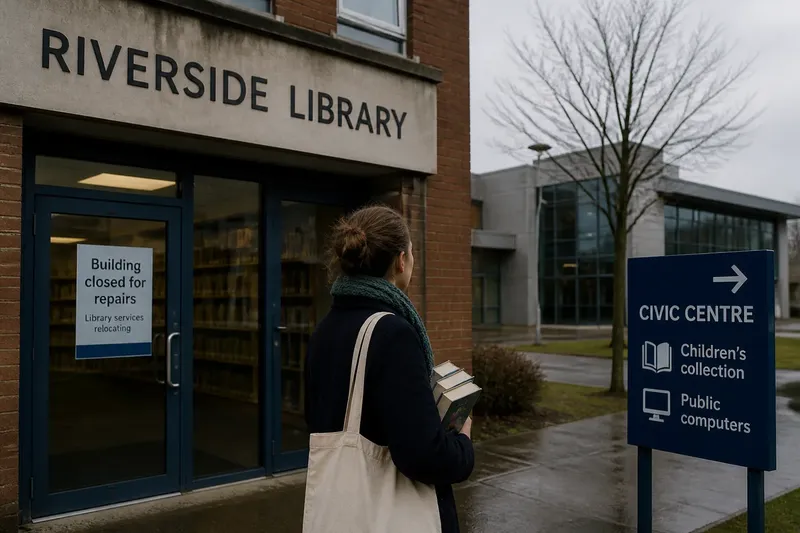
Your phone lights up over lunch: a post says a local library has closed, and someone in the family chat asks what happened. A five-minute pause before sharing breaking news gives you room to notice how the story is framed and what context is missing. You do not have to settle every detail before deciding what to pass on.
Notice how the post frames the event
A headline or social post makes choices about emphasis. It may lead with a dramatic image, an individual’s reaction or a claim about who is responsible. Those choices shape the story a reader receives, even when the underlying details are accurate.
Ask what the wording puts in the foreground and what it leaves out. Does it describe an event, imply a cause, or assign blame? Treat those as separate parts of the account. A confirmed closure, for instance, does not by itself establish why it happened.
Look for loaded language, missing dates and labels that turn an allegation into a settled fact. If a post calls a decision “secret” or a person “responsible”, check whether it explains who is making that characterisation and on what basis.
Breaking news deserves a question mark?
Why can early headlines change?
Initial coverage may be based on partial accounts, and a headline can be revised as editors receive clearer information. A change does not automatically mean the whole report was wrong; check which detail changed and whether the story explains why.
How can I tell what context is missing?
Look for basic details that would help you interpret the claim: when and where the event occurred, who is speaking, and what remains unknown. If a post leaves these out, avoid filling the gaps with assumptions.
What should I do with an old or undated post?
Check the publication date and look for a later update from the publisher or the organisation involved. If you cannot establish when the information applies, do not present it as current.
How should I respond when someone asks what happened?
Say what the material actually establishes and identify what it does not. A short reply such as “The library has announced a closure; I haven’t seen a reason stated” is clearer than a guess.
Read beyond the headline for the missing frame
A headline is a doorway, not the whole room. Read the article or statement it points to, especially the paragraphs that explain the timeline, identify the people or organisations involved, and describe what is still disputed. Notice whether the headline’s emphasis matches the evidence in the body.
Context can change the meaning of a detail. A quotation may be accurate but omit the question it answered; a photograph may show a real scene from a different time or place. Keep the caption and source attached to an image rather than treating the image alone as a complete account.
Think of a headline like a label on a jar: useful for orientation, but not a substitute for looking inside. If the article provides no link to its source material, treat its strongest claims with care and look for an account that explains where those details came from.
Check who is speaking and what they can know
Every source has a vantage point. A person who witnessed an event may describe what they saw, but may not know its cause. An organisation can explain its own decision or notice, while other parts of the story may require separate accounts.
Pay attention to attribution. “Officials say” is less informative than naming the relevant office or spokesperson. A direct statement, a reporter’s description and a commentator’s interpretation are different kinds of material; do not blur them together when you share.
Ask whether the article distinguishes what is documented from what is alleged or inferred. If it does not, preserve that distinction yourself rather than repeating an interpretation as fact.
Use one focused check to assess the framing
Choose a question that could change how you understand the story: Is the post current? Does the cited document say what the headline claims? Is a quoted sentence shown with enough context to understand it?
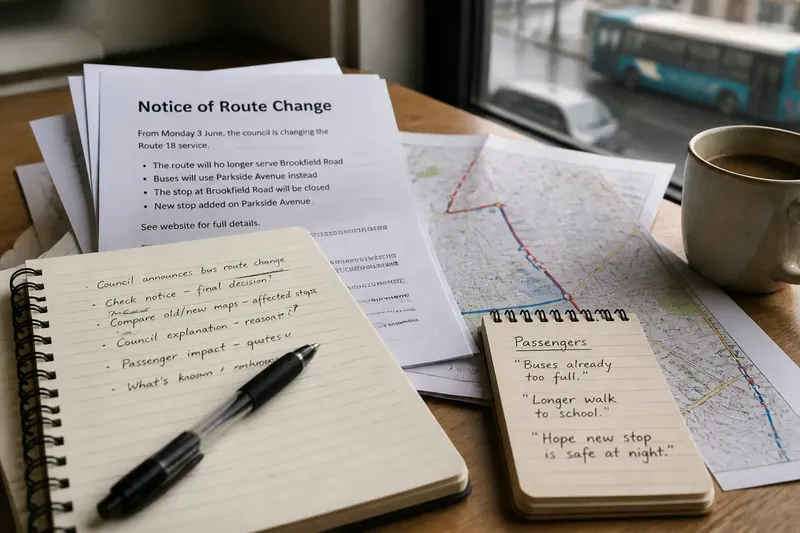
For a claim about a public decision, the relevant council notice or published minutes may clarify what was decided and when. For a claim based on a quotation, read the fuller statement if it is available. These checks help you assess the framing without opening a trail of unrelated links.
Check the date: If the post has a visible date and a later update, use the newer information; if no date is available, avoid calling the claim current and seek a dated account.
Check the place: If the text names a location that matches the linked report, keep the location in your wording; if it does not, leave the place out and look for the original account.
Check the attribution: If a named person or organisation is directly quoted, describe the statement as theirs; if the source is vague, do not present the claim as independently established.
Check the headline against the article: If the article supports the headline’s main claim, you can share the claim with its source; if it adds important qualifications, include them or link the fuller account.
Check whether an image has context: If its caption identifies when and where it was taken, retain those details; if not, do not use the image as evidence of this particular event.
Check what is still unknown: If the account names an unresolved point, preserve that uncertainty; if it offers no basis for a strong conclusion, wait for a fuller report rather than repeating the conclusion.
How can I share a careful account?
What if the headline sounds stronger than the story?
Share the article with a brief note about the qualification in its body, or wait until you can describe the claim more accurately. Do not pass on a headline alone if it leaves out a condition that changes the meaning.
What if a friend wants a quick answer?
Answer with the clearest supported detail and say what remains unclear. You can also send the original notice or full report so the other person can see its wording and context.
What if I shared a misleading version already?
Follow up in the same place with a correction that identifies the detail you overstated or missed. If possible, remove the earlier post when it could continue to give people the wrong impression.
Work through the pause with a concrete claim
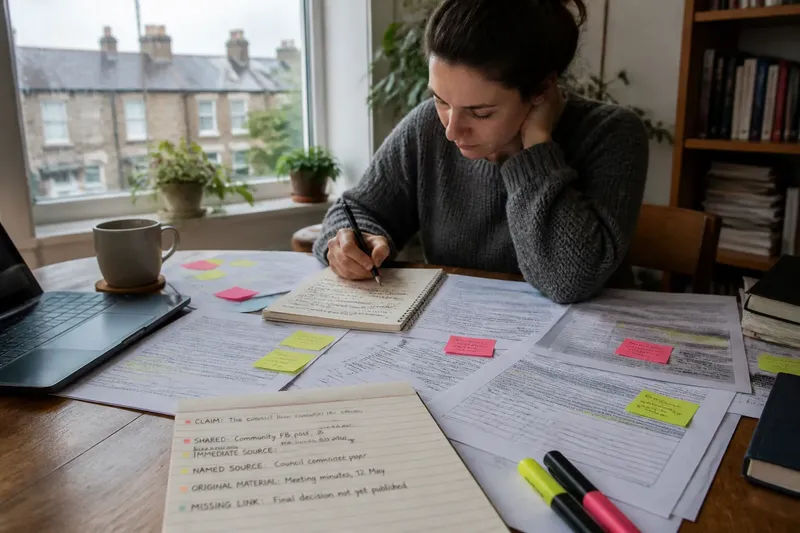
Imagine a fictional family-chat message says a nearby library has closed because of a dispute at a public meeting. The starting material is a forwarded sentence with no link or date. First, you separate its claims: the library may be closed, and the meeting may be the cause. Next, you find a current library notice that confirms the closure but gives no reason. Then you check the council’s published meeting note, which mentions a discussion but does not link it to the closure. The answer is that the closure is confirmed, while the suggested cause is not supported by these materials. You share the notice and say the reason has not been stated, rather than repeating the forwarded explanation.
That is the useful work of a five-minute pause before sharing breaking news: notice the frame, recover the context and choose wording that does not outrun what the account says. When the missing detail matters, waiting is a sound editorial choice. When it does not, a carefully qualified update can still help someone understand what is known.