Headline or Opening Paragraph: Where Should You Start?
Headline or opening paragraph? Compare their wording to spot a story’s frame, retain important qualifications and avoid mistaking an early impression for fact.
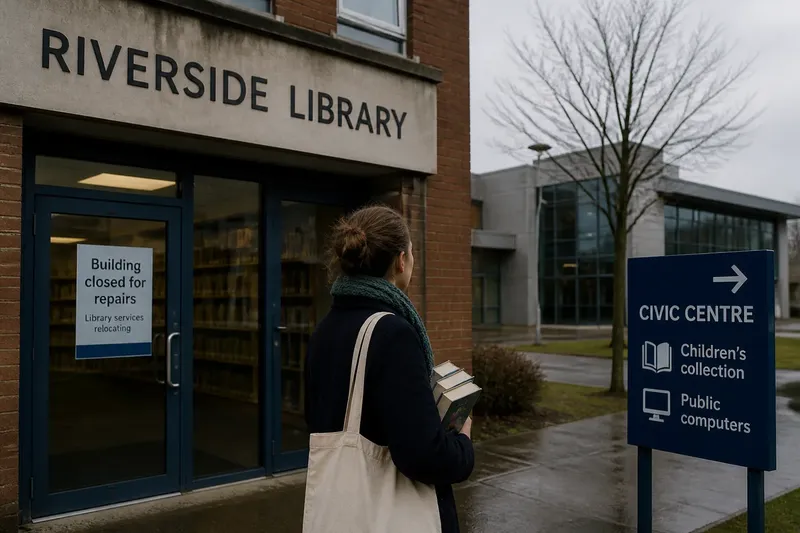
You spot a headline on your phone while waiting for a train: “Riverside Library to Close After Council Vote.” The headline gives you an immediate frame, but the opening paragraph may show what that frame leaves out. In this invented walk-through, a fictional council decision offers a way to read both without mistaking either for the whole account.
Notice what the headline states and implies
In our made-up town of Bellmere, the headline appears above a photograph of the Riverside Library entrance. It sounds definite: the library is to close, and a council vote has settled the matter. A reader might infer that the building will shut soon, perhaps because councillors chose that outcome outright.
Notice what the headline has and has not said. “Close” names a consequence, while “after” suggests a sequence without explaining the connection. The wording does not tell you whether the vote was final, whether the closure is temporary, or whether the council approved a proposal that includes another option. It also does not identify who will be affected or when any change might happen.
This is not a reason to dismiss the headline. A headline is a compact signpost, built to identify the story and give it an angle. It is like a label on a folder: useful for orientation, too small to settle every question.
Separate what the line states from what you have supplied yourself. “The council voted” is explicit. “The library will shut next month” is not in the headline, even if its wording nudges you towards that assumption. That distinction keeps a first impression from becoming a verdict.
Use the opening paragraph to refine the claim
The opening paragraph in this fictional story says: “Bellmere councillors have approved a plan to move the Riverside Library’s children’s collection and public computers to the nearby civic centre while the library building undergoes repairs; the council has not set a reopening date.” The situation now looks different. The vote was real within the invented account, and a move is planned, but the paragraph describes a temporary arrangement rather than a decision to end the service for good.
The opening paragraph does a different job from the headline. It gives the central development in fuller form: what is changing, where services will go and what remains undecided. It also introduces a limit—the absence of a reopening date—that matters to anyone trying to understand the practical consequences.
Still, the paragraph is not a complete account. It does not say whether every service will move, how residents can reach the civic centre, how long repairs may take or why the building needs work. It tells us more than the headline, not everything the story could tell us. Treating it as the final word would simply replace one premature conclusion with another.
Revise the first impression rather than defending it. The headline’s “close” may refer to the building’s temporary closure, while the opening paragraph describes the relocation of selected services. Those statements can fit together, but the broad wording makes the distinction easy to miss. The useful question is not only “Is it closing?” but “Which parts of the library are moving, and what is still unknown?”
Compare the headline’s frame with the paragraph’s detail
Look at the two lines side by side. The headline foregrounds the building and the council vote. The opening paragraph foregrounds the service move and the repair work. Neither necessarily contradicts the other, yet each directs attention towards a different part of the event.
That difference is framing at close range. A headline has room for a sharp summary, so it may put an outcome or conflict in the foreground. An opening paragraph often gives that claim more shape by adding a cause, a qualification or an immediate consequence. The reader’s task is not to decide that one form is automatically fairer; it is to notice what each makes prominent and what each leaves waiting.
In Bellmere, “close” is broad. It may accurately describe the building becoming unavailable during repairs, but on its own it can suggest that the library service is ending. The opening paragraph narrows the claim by naming the children’s collection and public computers as the services moving. It does not establish whether other services will continue, so do not silently turn “the children’s collection and public computers” into “everything the library offers”.
Watch for the shift from a broad phrase to a narrower description. Ask whether the opening paragraph confirms the headline, qualifies it or changes the emphasis. If it adds a condition, keep that condition attached to the original claim. If it introduces a different focus, note the change instead of assuming the headline and first paragraph are interchangeable summaries.
Identify what remains unanswered
The invented paragraph gives readers enough to understand the immediate decision, but it also leaves questions for the rest of the story. Does the council plan cover the whole library or only named services? What do the repairs involve? Who will explain access to the civic centre? Has the council said what would determine a reopening date?
These are not all questions a headline and opening paragraph must answer. They help you judge what further context matters. A story about public access may need details about transport or opening arrangements; one focused on council procedure may need the wording of the approved plan. The relevant follow-up depends on the claim you are trying to understand.
Continue into the body of the article and look for evidence and attribution. Does the story say what the council approved, or only repeat a broad description? Does it distinguish a decision from a proposal? Are uncertainties identified as uncertainties? These questions take you beyond the first two lines, but they grow naturally from the gap between the headline’s compressed wording and the opening paragraph’s added detail.
Be alert to changes in time and certainty. “Will move” describes an intended action in the fictional paragraph; “has moved” would describe a completed one. “No reopening date” does not mean the building will never reopen. Small grammatical shifts can make a story sound more settled than the information allows.
How should you read a headline and opening paragraph together?
Should you read the headline before the opening paragraph?
Usually, yes: it tells you what the article presents as its central subject. Treat it as an initial frame, then compare its wording with the opening paragraph before deciding what the claim means.
What if the opening paragraph seems to contradict the headline?
Check whether one describes a broad outcome and the other gives a narrower condition, or whether they make genuinely different claims. Read further for explanation and attribution rather than choosing the more dramatic version by instinct.
Can the opening paragraph be trusted as the complete account?
No opening paragraph can contain every relevant detail. It is a useful early account of the development, but the rest of the story may add exceptions, competing descriptions, background or unresolved questions.
What if the headline uses a word the opening paragraph does not repeat?
Ask what the word implies and whether the paragraph supports that implication. In Bellmere, “close” needs to be read alongside the stated move of particular services and the fact that a reopening date has not been set.
Carry a more precise account into the conversation
Say you encounter the Bellmere headline in a neighbourhood group and are tempted to tell a friend, “The council is shutting the library.” After reading the opening paragraph, a more accurate account would be: “The council approved moving the children’s collection and public computers to the civic centre during repairs, and there is no reopening date yet.” That wording preserves the development and its uncertainty without claiming that every service is ending.
The practical habit is simple: notice the headline’s strongest word, read the opening paragraph, then adjust your description to fit the detail actually given. Carry forward the qualifications, and mark unanswered questions as unanswered. If the rest of the article supplies further context, let it refine your understanding rather than forcing the first impression to stand.
For any news story, the headline is a prompt to look closer, not a substitute for the account that follows. When you pass the story on, use the most precise wording the evidence in front of you supports—and leave room for what the article has not yet established.